BIRTH: 1773, Virginia, USA
DEATH: Between 1850 and 1860, Blount, Alabama, USA
FATHER: Unknown1
MOTHER: Unknown2
SPOUSE: Unknown3
The Life of Edward Gregory
Edward Gregory entered the world in 1773, in the rugged backcountry of what would become the South Carolina Upcountry. The Revolution was stirring, but in the foothills of the Blue Ridge, life was measured not by politics but by the rhythm of the land—clearing fields, tending livestock, and carving a home out of the wilderness.
He grew up among the Scots-Irish frontier families who had pushed into the backcountry in the 1760s and 1770s: Haynes, Finleys, Harrisons, Martins, and others whose names would echo through his life. These families intermarried, traded labor, and shared the burdens of frontier survival. Edward learned early that a man’s strength was measured not only by his hands but by the kin and neighbors who stood beside him.
Around 1793–1795, Edward married a young woman from this same community—her name now lost to time, but her presence unmistakable in the census records that show a young couple beginning a family. Their first son, John, was born around 1795. Their second, Griffin, arrived in 1797 or 1798, a child who would one day carry the Gregory name into the next generation.
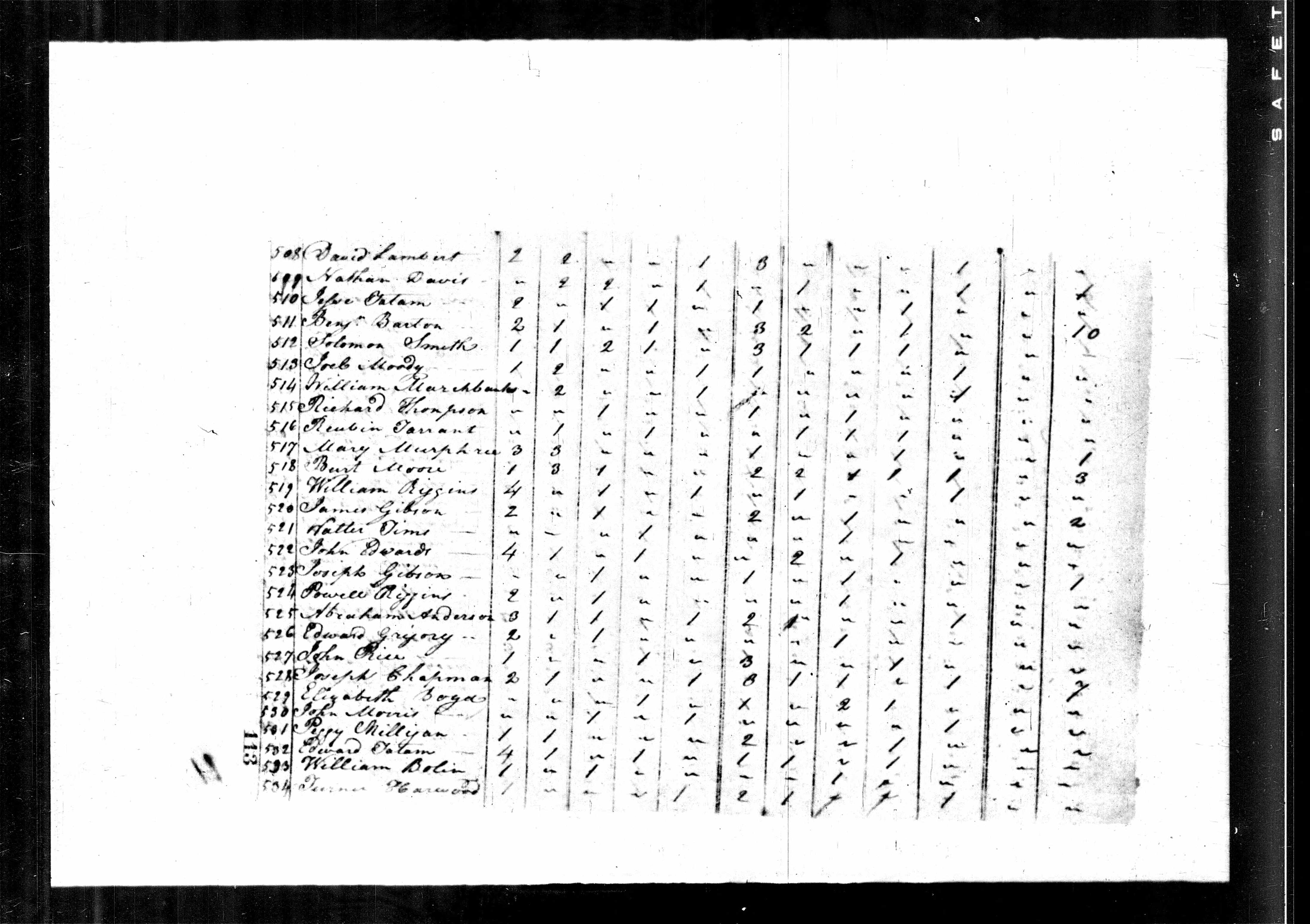
By 1800, Edward appears in the census of Pendleton District, South Carolina, a region of small farms and tight-knit kin networks. His household was already bustling—children under ten, a wife in her twenties, and the beginnings of a life that looked much like those of his neighbors.
But the frontier was always shifting.
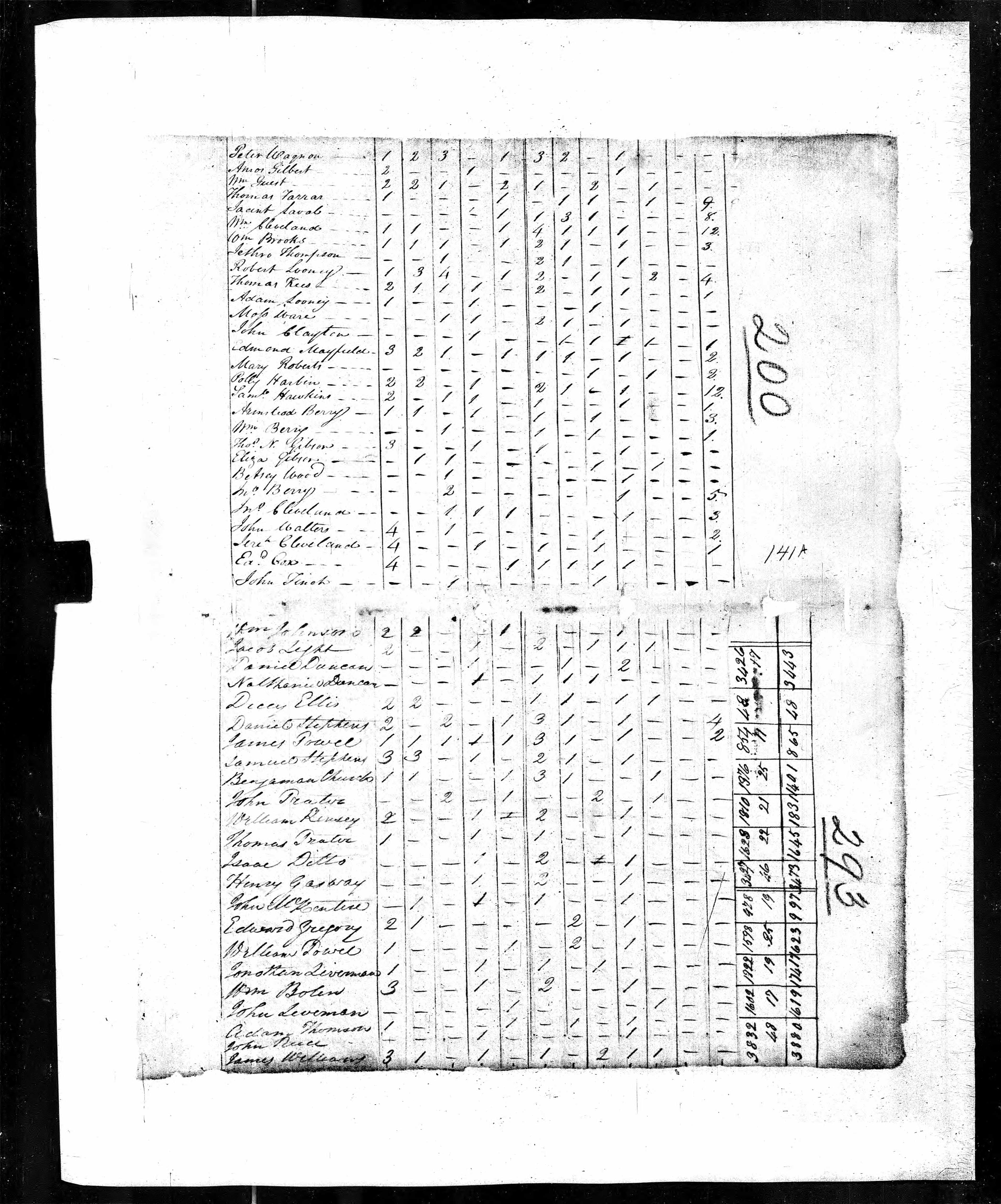
By 1810, Edward was still in Pendleton, but the land was filling up. Younger men were talking about Georgia, where new territory was opening. Edward’s older sons were nearly grown. The pull of opportunity tugged at him.
Sometime between 1812 and 1820, Edward gathered his family and joined the great migration southward into Georgia, following the same path as the Haynes and Finley families. They traveled by wagon, carrying only what they could load—tools, bedding, seed corn, a few animals, and the family Bible.
In Georgia, the Gregory children married into neighboring families. Griffin married Cynthia Haynes in 1818, binding the Gregorys even more tightly to the Upcountry kinship web.
But Edward wasn’t done moving.
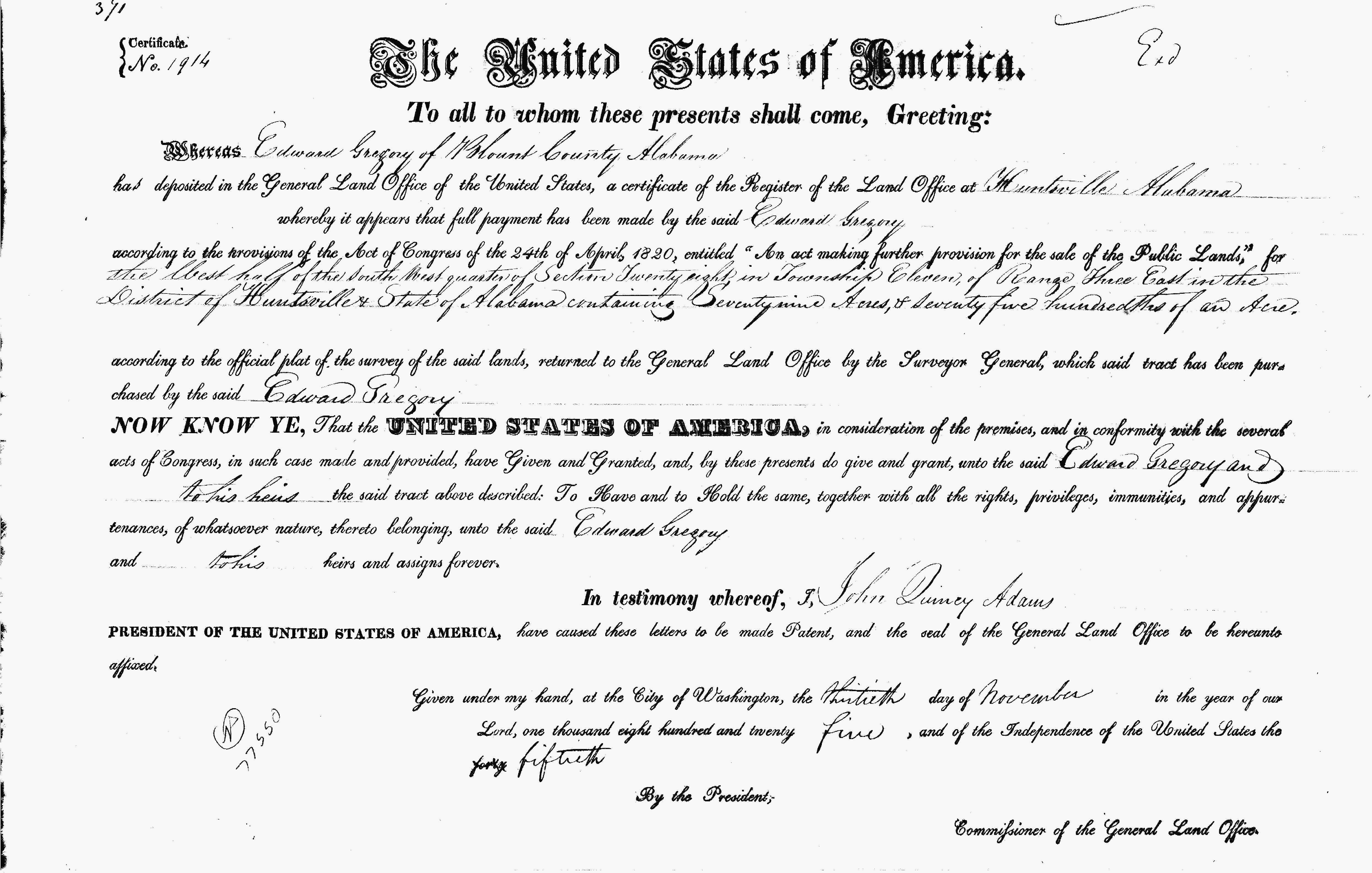
By 1825, he had crossed into Alabama, one of the earliest waves of settlers to enter the newly opened lands. That year, he walked into the land office at Huntsville and paid cash for 175 acres in Blount County. The land patent bears the signature of President John Quincy Adams, a testament to how far the frontier had pushed.
Edward was 52 years old—still strong, still ambitious.
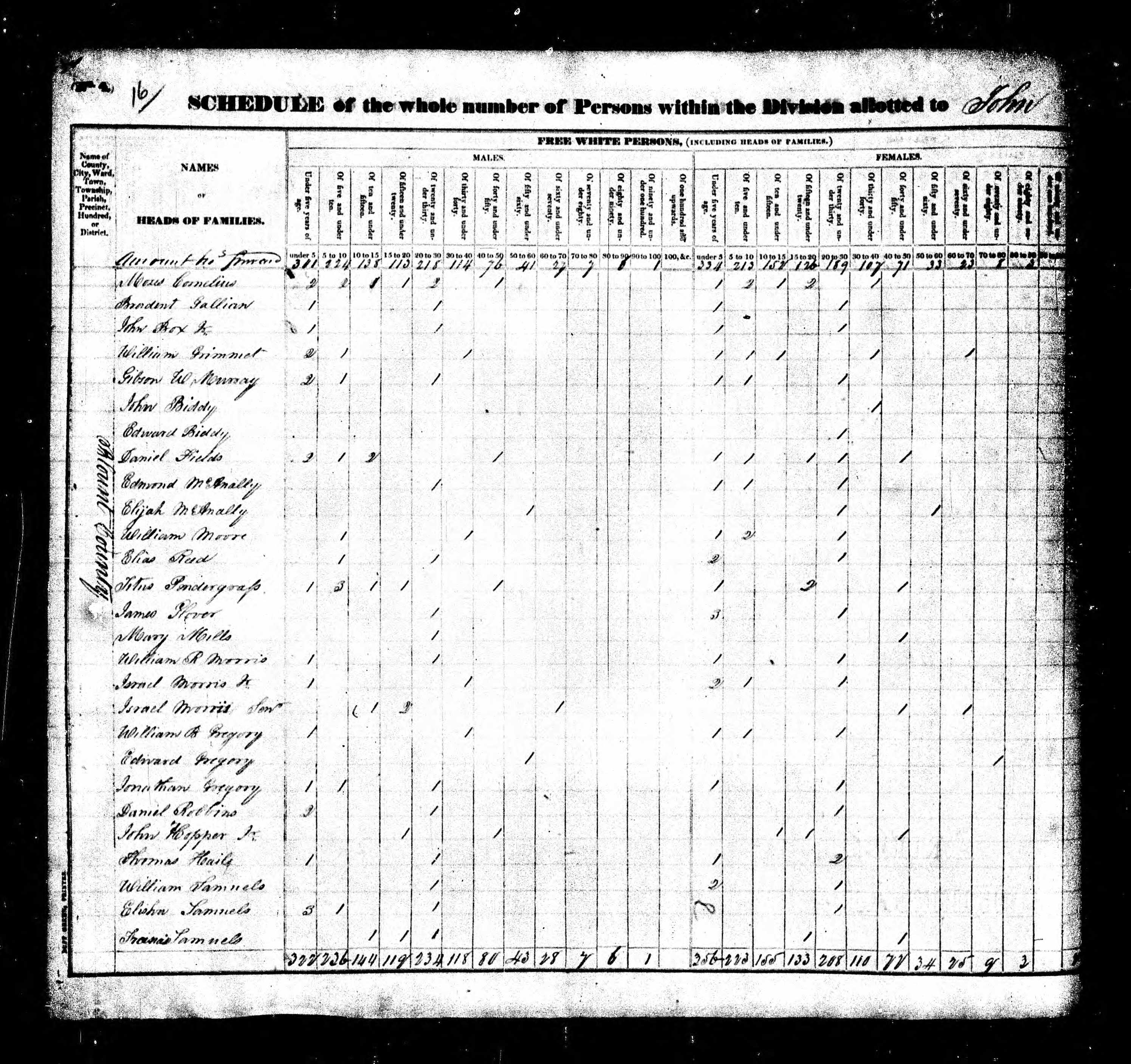
The 1830 census shows him in Blount County, his household smaller now. Some children had married and moved out; others had died young, as so many did. His wife—his partner of more than thirty years—was gone by this time, her death unrecorded but her absence unmistakable.
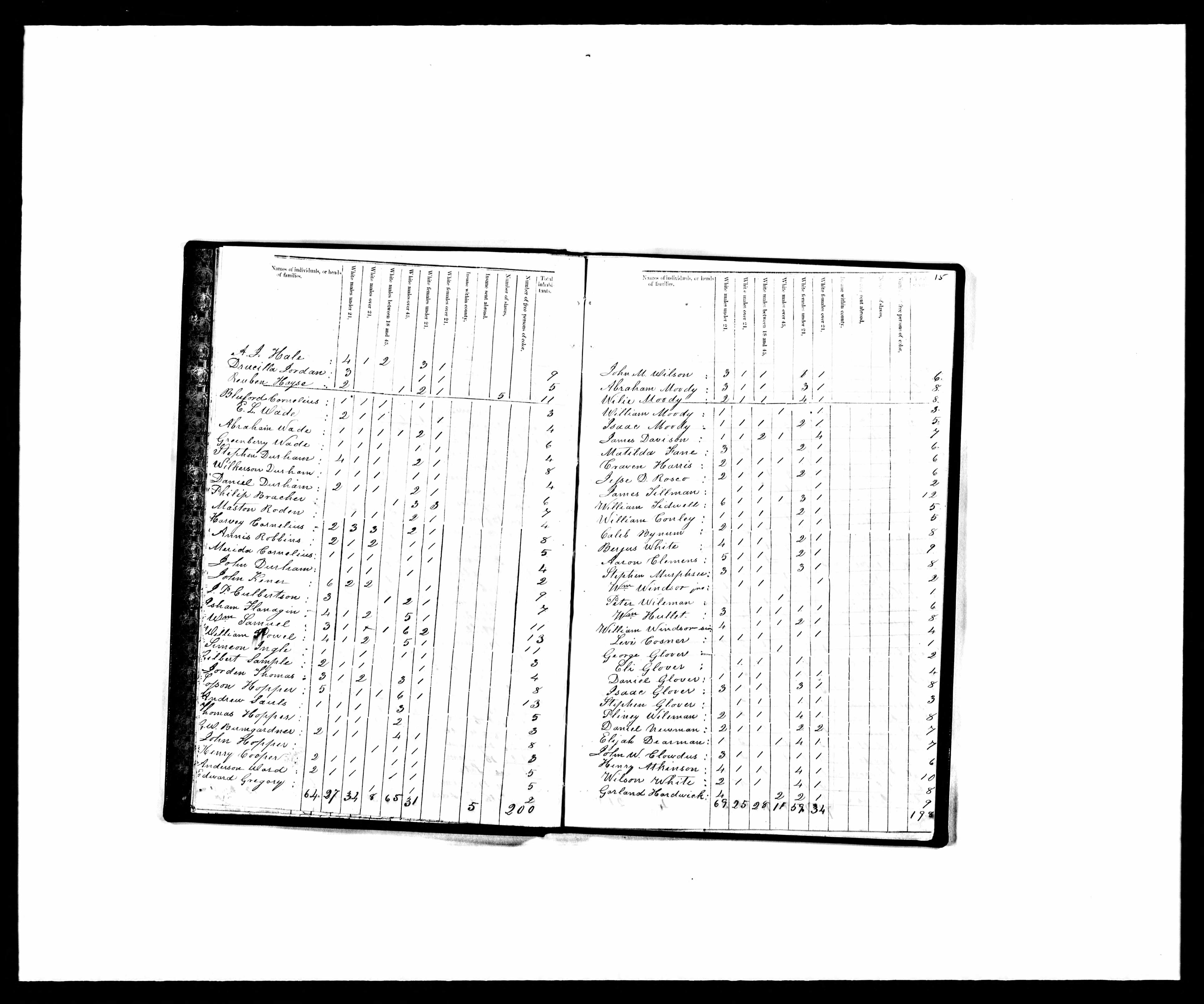
Edward lived long enough to see the world change around him. By 1850, he was in Calhoun County, an old man of 77, still owning land back in Blount County. He watched his grandchildren grow, watched Alabama become a state, watched the frontier close behind him.
And then, Edward Gregory slipped quietly out of the historical record. Edward died between 1850 and 1860, likely in Calhoun or Winston County, Alabama.
He died as he lived: on the frontier, surrounded by the family he had carried across three states and half a century of American expansion.
Legacy of Edward Gregory
Edward Gregory was not a general, not a politician, not a man whose name appears in history books. He was something rarer: a man who built a life on the frontier and carried his family forward through sheer endurance.
Parents
FATHER: Unknown1
MOTHER: Unknown2Marriage
Unknown3
Children
- John Gregory (1795–?)
- Griffin Gregory (1798–1860) married Cynthia Haynes (1800-1860)
- Female Gregory (born ca. 1799–1800)
- Male Gregory (born ca. 1801–1804)
- Male Gregory (born ca. 1805–1809)
- Female Gregory (born ca. 1805–1810)
- Male Gregory (born ca. 1811–1815)
- Female Gregory (born ca. 1811–1815)
Documents
- Census
- 1800 United States Federal Census > South Carolina > Pendleton District > Edward Gregory
- 1810 United States Federal Census > South Carolina > Pendleton District > Edward Gregory
- 1830 United States Federal Census > Alabama > Blount > Edward Gregory
- Alabama, U.S., State Census, 1820-1866 > Edward Gregory, County: Blount; Census year: 1850
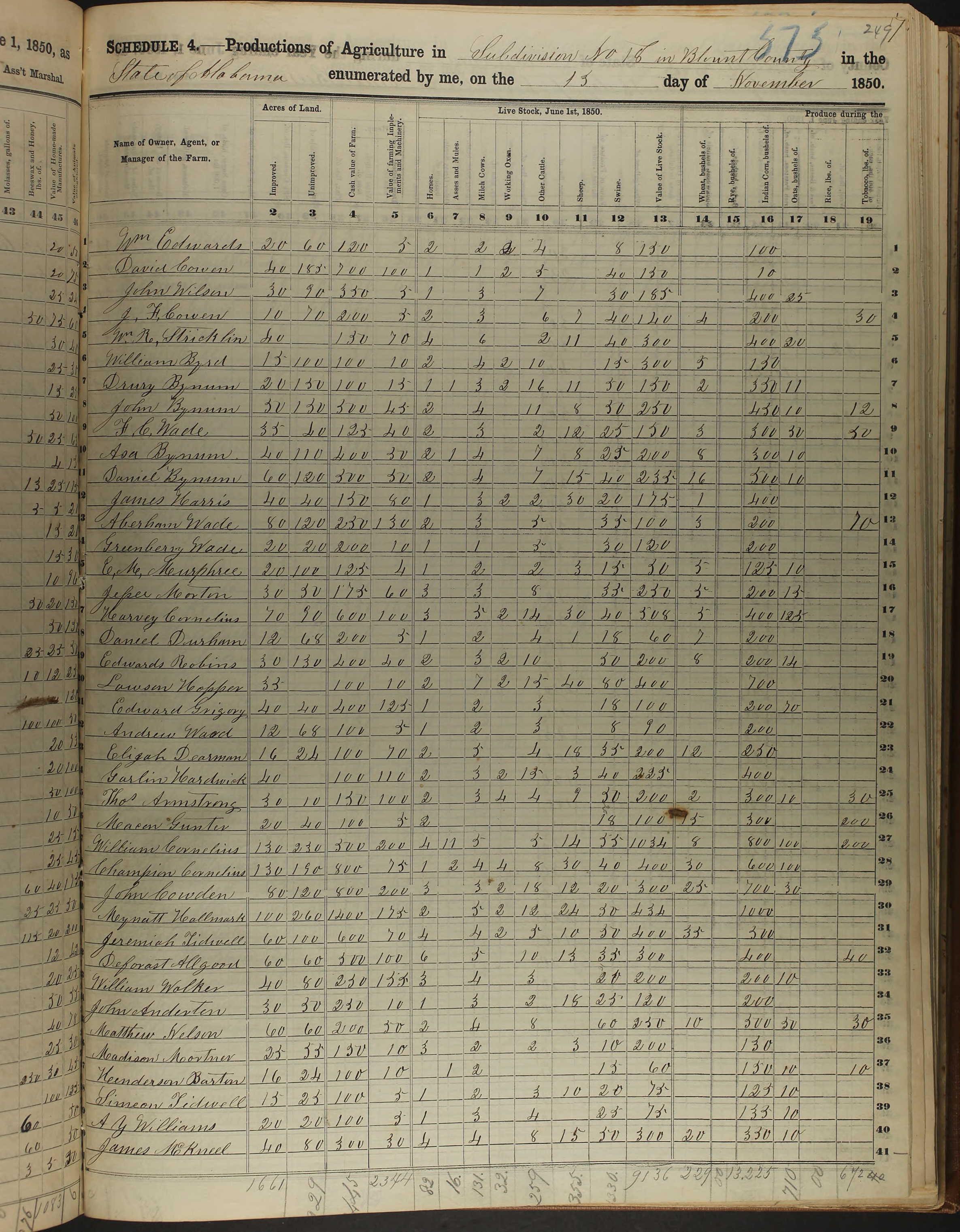
- U.S., Selected Federal Census Non-Population Schedules, 1850-1880 > Edward Grigory;
Enumeration Date: 13 Nov 1850; Place: Subdivision 18, Blount, Alabama, USA; Schedule Type: Agriculture; OS Page: 249; Line Number: 21
- Other
- U.S., General Land Office Records, 1776-2015 > Alabama > Blount\Etowah > Name:
Edward Gregory; Issue Date: 30 Nov 1825; Place: Blount, Etowah, Alabama, USA; Land Office: Huntsville; Meridian: Huntsville; Township: 11-S; Range: 3-E; Section: 28; Accession Number: AL1180__.371; Document Number: 1914
- U.S., General Land Office Records, 1776-2015 > Alabama > Blount\Etowah > Name:
Footnote
- Possible Parentage of Edward Gregory: Although no primary document has been located that explicitly identifies the parents of Edward Gregory (1773–1853), circumstantial evidence strongly suggests that he may have been a son of Jonathan Gregory (1750–1834) of the South Carolina Upcountry. Jonathan’s age and residence align precisely with Edward’s documented birthplace and early life, and both men appear within the same South Carolina–to–Georgia migration corridor that later carried Edward’s son Griffin into Alabama. The absence of competing Gregory males of the appropriate age in the region, combined with consistent naming patterns and overlapping geographic footprints, strengthens the likelihood of a father–son relationship. While the connection remains unproven pending discovery of probate, land, or Bible records, the cumulative evidence makes Jonathan Gregory a high‑probability paternal candidate for Edward.
- If Jonathan Gregory was Edward’s father, then Edward’s mother was Jonathan’s first, unknown wife, who died before 1780.
- The wife of Edward Gregory (b. 1773) is unnamed in surviving records. Census reconstructions from Pendleton District, South Carolina (1800, 1810) and Blount County, Alabama (1820, 1830) indicate she was born ca. 1775–1780, likely in the South Carolina Upcountry, and married Edward ca. 1793–1795. She bore at least eight children between ca. 1795 and ca. 1815, including Griffin Gregory (b. 1797/98, SC). The consistent association of Edward and his descendants with the Haynes, Finley, and Harrison families in Pendleton and later in Blount County, Alabama, suggests she belonged to this same Scots-Irish kinship network, though her maiden surname remains unproven.
Relation of Edward Gregory to Karen Edgar: 4th great-grandfather
Page last updated June 2, 2026
Search the Staggs Family History site

 Staggs Family History